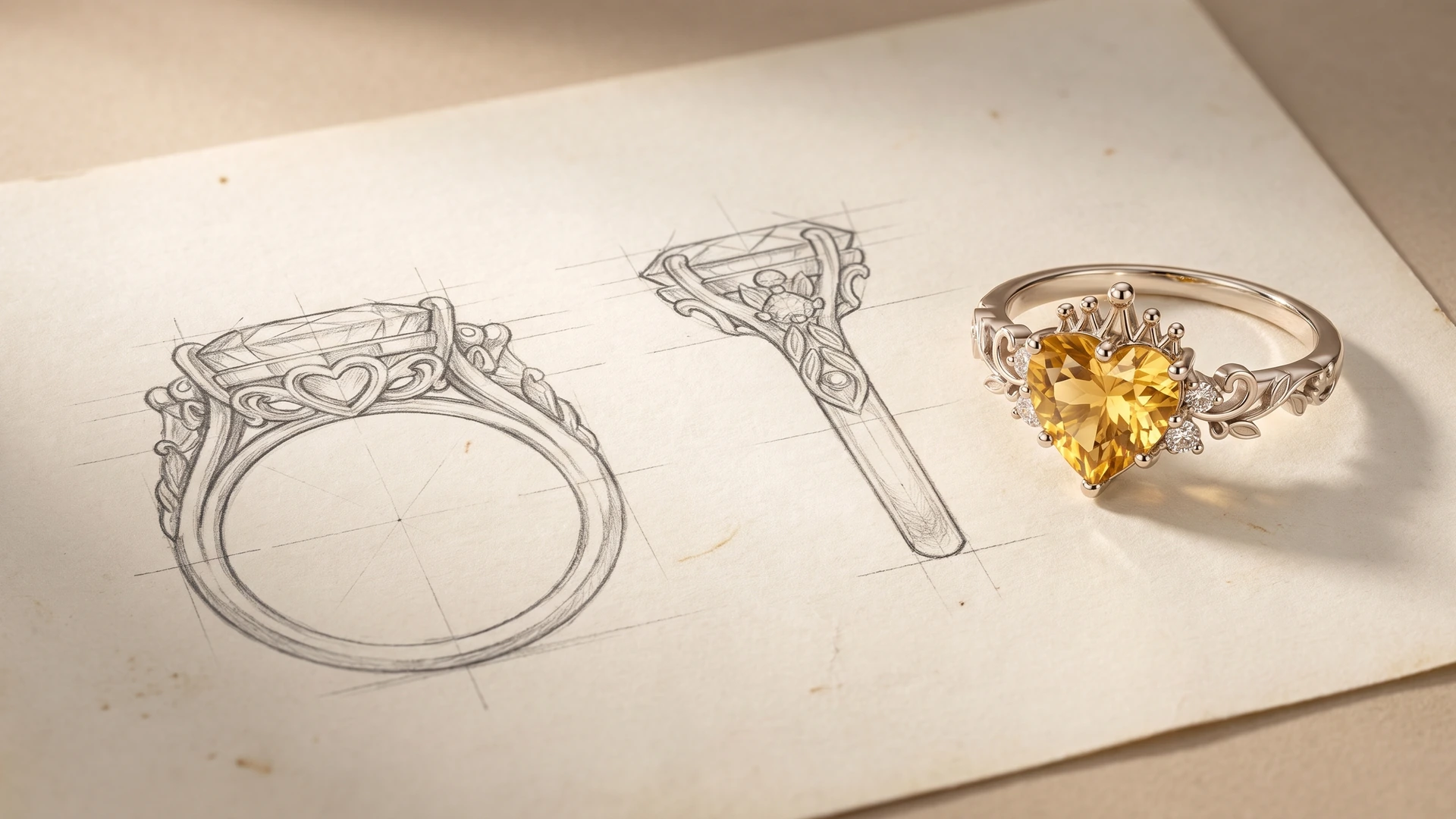
None of these terms is legally defined in most markets. They are trade language, and trade language drifts towards whichever meaning sells. It is worth knowing precisely what each one commits a house to, because the gap between two of them can be the whole of what you thought you were buying.
The four words
- Production
- A design made repeatedly, in whatever quantity the market takes, in standardised stones sorted to a specification. The stones are chosen to fit the design. Nothing is wrong with this; it is most of the industry, and it is what makes a house's signature recognisable across a window.
- Limited edition
- The same design, made a fixed number of times. The number is a commercial decision rather than a natural limit — a house choosing fifty could as easily have chosen five hundred. Scarcity here is manufactured, which does not make it worthless, but does make it a promise about volume rather than about the object.
- Made to order
- An existing design, begun after you order it, often with a choice of stone, metal or size. The waiting is real. The design is not new, and the house will make it again for the next client who asks.
- Bespoke, or made to measure
- A design developed with you. This is where the language is loosest. A bespoke commission may be genuinely original, or it may be an adjustment of a house's existing model — and even where it is original, the house usually retains it, and may well produce it again for someone else once your commission is delivered.
The question underneath
All four terms describe the object. The distinction that actually matters describes the design.
An object can be unique while its design is not. That is the space almost all of this vocabulary lives in.
A pièce unique may be genuinely the only one of its kind — this stone, cut this way, set in this metal — while the drawing behind it stays open on the house's system, ready to be executed again next year in a different stone. Both pieces are then honestly one of a kind. Neither design is. And the second client is generally not told about the first.
This is not usually deception. It is simply the default: a house that has developed a good design has an asset, and retiring an asset is an expensive thing to choose. Which is why it has to be chosen deliberately, and put in writing, or it does not exist.
Why the stone decides it
There is one condition under which the design cannot honestly recur, and it is geological rather than commercial. If a design was conceived in response to a particular stone — its proportion, its shift of colour, the position of a particular inclusion — then reproducing that design in a second stone produces something that no longer fits. The stone was the brief. Change it and the answer is wrong.
This is why a stone-first house and a design-first house end up in different places whatever words they use. A house that draws a collection and then buys stones to fill it has, by construction, designs that outlive any one stone. A house that refuses to draw until a stone is in front of it does not. The order of operations is the whole argument.
What to ask before you buy
These are fair questions, and a house that takes the claim seriously will have ready answers to all of them.
- Is the design retired when this piece is delivered, and is that undertaking written into the agreement rather than said in the room?
- What happens to the mould, the model and the CAD file? “Archived” and “destroyed” are different answers.
- Could this design be made again in a different stone, a different metal, a different colour of gold, or at a different size? Those four are how a retired design usually returns.
- Is there a registry, and does it record that the design was closed as well as that the piece was sold?
- Does the undertaking bind the house's successors, or does it expire if the house is sold?
- Is the stone accompanied by a report from an independent laboratory, and does the report name the treatment?
The sixth question is about the stone. The first five are about whether the word on the invoice means anything.
Where the House stands
SINGULLUM answers the first five in writing. One stone, one Creation, one owner: the design is retired on completion, the mould is destroyed or permanently sealed, and the undertaking binds the House and its successors — not in another stone, another colour, another metal, or for another client. The terms of it are set out in the covenant and carried into the agreement for each Creation.
Written to inform. It is not advice on a purchase, and it describes trade practice generally rather than the terms of any particular house.
The House receives privately. If a stone in this chapter interests you, the conversation begins here.